In the ever-evolving world of web3, where decentralized identities are becoming as essential as email addresses, the Ethereum Name Service (ENS) is making waves with a series of game-changing updates. As of early 2026, these advancements are not just tweaking the system—they’re setting the stage for .eth names to break out from crypto Twitter (CT) echo chambers and into mainstream adoption. For savvy users and investors eyeing the next big thing in digital ownership, understanding these shifts could mean getting ahead of the curve. Let’s dive into the key activities pushing the .eth narrative forward.
ENSv2: Staying True to Ethereum’s Roots for Broader Reach
One of the most significant moves came in February 2026 when ENS announced the deployment of ENSv2 directly on Ethereum’s Layer 1 (L1) mainnet, ditching earlier plans for a dedicated Layer 2 called Namechain. This decision leverages Ethereum’s enhanced scalability, including gas limits pushing toward 200 million and fees plummeting by 99%, making .eth registrations more affordable and accessible than ever.
Why does this matter for adoption? By keeping everything on L1, ENS avoids the fragmentation that could come from siloed L2s, ensuring .eth remains a unified, censorship-resistant namespace. Ethereum co-founder Vitalik Buterin has thrown his weight behind it, emphasizing ENS’s potential in decentralized social spaces and identity verification. Imagine a world where your .eth handle seamlessly integrates with traditional DNS systems—think logging into apps, sending crypto, or even verifying your online presence without clunky wallet addresses. This L1 focus could be the tipping point for non-crypto users, turning .eth into the “DNS for web3” and sparking real-world utility in everything from e-commerce to social media.
Revamping the User Experience with ENS App Alpha
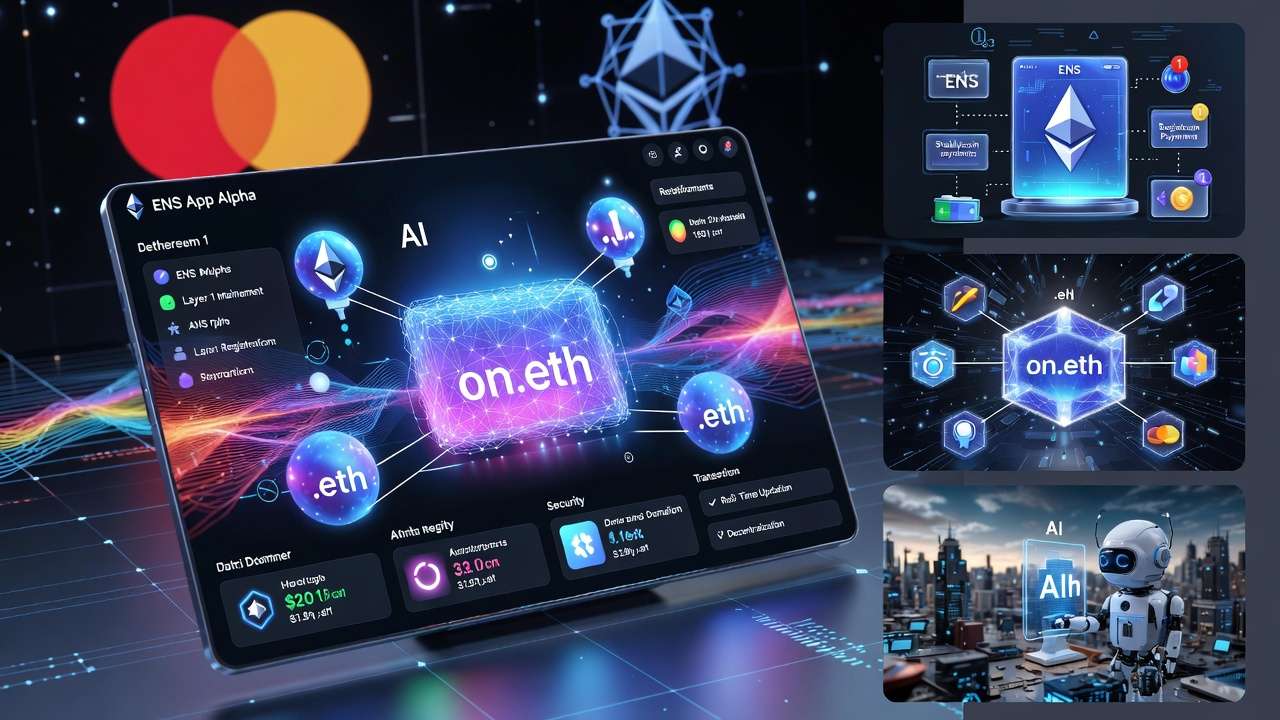
No tech thrives without ease of use, and ENS is tackling that head-on. On February 4, 2026, the project launched its App Alpha on the Sepolia testnet, featuring a streamlined registration process with stablecoin payments, instant notifications, chain abstraction, and a sleek dashboard. Gone are the days of confusing setups and high barriers; claiming a .eth name now feels as straightforward as creating a username on your favorite app.
This upgrade is a direct shot at mass adoption. For beginners dipping their toes into web3, the simplified UX means less friction and more engagement. Picture creators using .eth to verify NFTs, businesses adopting it for fraud-proof branding, or everyday folks linking it to emails and websites. As web3 tools become more intuitive, .eth could evolve from a niche crypto perk to a universal digital ID, pulling in users who previously shied away from the complexity.
“on.eth”: Expanding Beyond Names to Blockchain Coordination
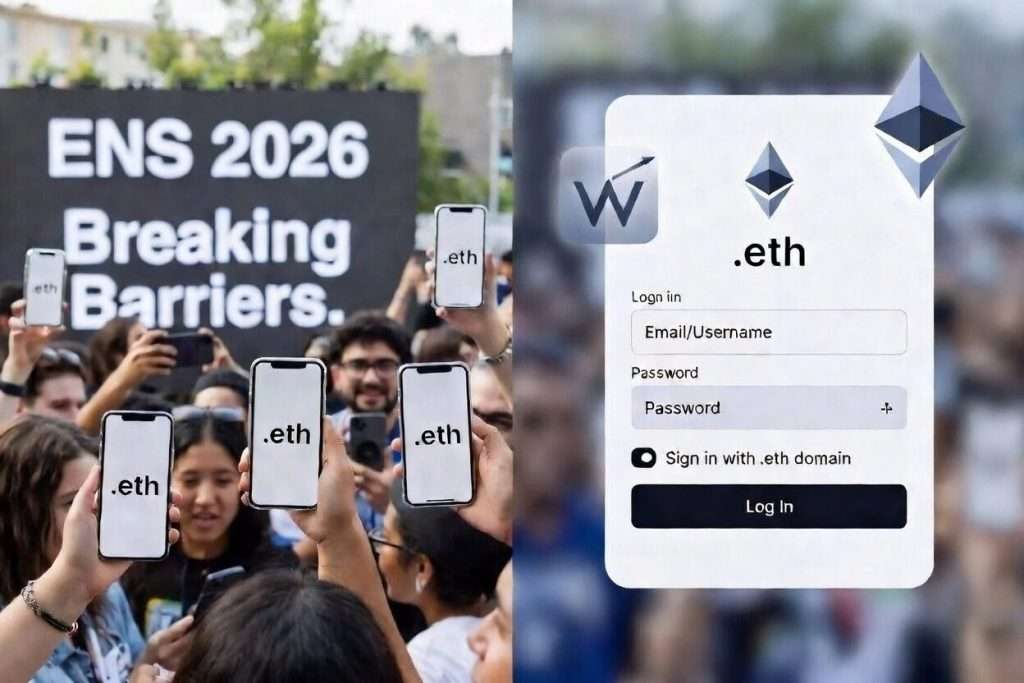
In a bold expansion of its scope, the ENS DAO registered the first two-character .eth name, “on.eth,” in mid-February 2026. This isn’t just a vanity name—it’s positioned as a canonical registry for blockchain environments like chains and rollups, standardizing things like chain IDs and profiles.
The implications? In our multi-chain reality, “on.eth” could serve as critical infrastructure for seamless interoperability, making cross-chain transactions smoother and more reliable. Developers and enterprises will love this for building compliant, global systems, while it reinforces ENS as a coordination powerhouse. As partnerships with traditional DNS players grow, .eth might bridge the gap between web2 and web3, driving adoption among tech-savvy businesses looking for efficient, decentralized tools.
Tying into AI with ERC-8004: The Future of Autonomous Agents
Ethereum’s new ERC-8004 standard, rolled out in early February 2026, is supercharging AI agents by enabling on-chain reputation, work verification, and payments—integrated with wallets like MetaMask and heavyweights such as Google and Coinbase. Experts like Tom Lee and Jensen Huang are buzzing about Ethereum’s synergy with AI, predicting millions of agents relying on .eth for secure identities.
Here’s where it gets exciting for adoption: AI agents could bring .eth to the masses through everyday tasks, like an AI handling bookings or payments via a .eth-linked wallet. This reduces DeFi risks like fraud while making transactions more trustworthy. As AI permeates our lives, .eth stands to become the go-to for agent identities, extending its reach far beyond CT circles into practical, non-crypto applications.
Institutional Momentum: From Mastercard to High-Value Domains
Big players are noticing. Mastercard snagged “mastercard.eth” back in 2025 for over 11 ETH, signaling strategic interest in on-chain identities. Meanwhile, discussions around premium .eth domains like money.eth and fund.eth highlight their role in on-chain finance. ENS’s self-sustaining model, raking in $40-60 million annually from registrations without token inflation, adds to its appeal.
For adoption, this institutional buy-in is huge. As real-world assets (RWAs) and tokenized finance grow, .eth becomes indispensable for branding and compliance. Projections suggest ENS could hit $100 by 2030, fueled by Ethereum’s upgrades and broader web3 expansion.
The Road Ahead: From Hype to Everyday Essential
These developments paint a clear picture: ENS is evolving .eth from a speculative asset into a foundational element of digital life. With Ethereum’s 2026 efficiency boosts, AI integrations, and institutional interest, the narrative is shifting toward real utility—decentralized, secure, and user-friendly identities that work across the web.
If you’re new to this, start by exploring the ENS App Alpha or grabbing a .eth name today. For seasoned CT folks, keep an eye on how these pieces connect; the breakout to mainstream could happen sooner than you think.
And remember, when you’re looking to grab your forever .eth name, use ensvision.com to find, register, manage, buy or sell